Park Place Dental Group
Dentistry & Cosmetic and Restorative
Dentistry located in Arts Section, Newark, NJ
Want a brighter smile but worry it will hurt? You are not alone. Many patients who search for teeth whitening in Newark also deal with tooth sensitivity, and the goal is to get visible whitening results without triggering days of "zingers" from cold air, water, or even brushing.
In our previous blog, "Things to Know Before Getting Teeth Whitening in Newark," we covered general preparation and considerations. In this article, we focus on sensitivity-first strategies and the decision points that matter most if your teeth are already sensitive.
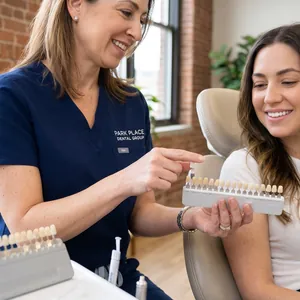
TL;DR - Brighter Teeth Without the Sensitivity Spiral
If you have sensitive teeth, whitening can still be possible, but it works best when you start by identifying the cause of sensitivity and choosing a whitening plan designed to protect comfort.
- Whitening sensitivity is usually temporary, but it can feel stronger if dentin is exposed or there is an untreated issue.
- A dental exam first helps rule out cavities, cracks, gum recession, or gum inflammation that can make whitening uncomfortable.
- Lower-strength or staged whitening often improves comfort while still delivering visible results.
- Desensitizing steps before and after (professional and at-home) can reduce "zingers."
- If one tooth hurts sharply, stop whitening and get evaluated.
Why Whitening Can Trigger Sensitivity (And Why It Is Not the Same for Everyone)
Teeth whitening works by using whitening agents that move through the outer tooth structure and help break up stains. For some people, that temporary process can also make teeth feel more reactive to temperature and touch.
Sensitivity tends to be more noticeable when there is less natural protection between the surface of the tooth and the nerve. Common examples include enamel wear, gum recession that exposes root surfaces, or micro-cracks that create pathways for stimulation.
If you are frequently dealing with sensitive teeth in Newark, it may be worth reviewing common causes and treatment options on our sensitive teeth page before starting any whitening plan.
Teeth Whitening in Newark When You Have Sensitive Teeth: Start With These Decision Points
The most comfortable whitening plans are built around your starting point, not just your target shade. Before whitening, we generally want to answer a few practical questions that affect both results and comfort.
1) Is Your Sensitivity General or Is It One Specific Tooth?
Generalized sensitivity (many teeth reacting similarly) can sometimes be managed with comfort-focused whitening settings. Sensitivity that is sharp and localized to one tooth may suggest an underlying issue such as decay, a crack, or a failing filling. Whitening can make that tooth more reactive, even though whitening is not the root cause.
2) Do You Have Gum Irritation, Recession, or Exposed Roots?
Gum recession can expose root surfaces that are naturally more sensitive than enamel. Whitening gel can also irritate soft tissue if it contacts the gums. A dentist can help reduce risk by addressing gum inflammation and by selecting a delivery method that keeps whitening materials where they belong.
3) Are There Restorations in the Smile Zone?
Crowns, veneers, and tooth-colored fillings typically do not whiten the same way natural teeth do. If you are whitening for a cosmetic event (photos, interviews, celebrations), planning matters so your smile stays consistent. Our team often discusses this during cosmetic planning visits with Dr. Myung Hae Hyon D.D.S.
If you are comparing options beyond whitening, our cosmetic dentistry services page outlines other smile-enhancing treatments that may be a better fit for certain stains or existing restorations.
Comfort-First Strategies Dentists Use to Reduce Whitening Discomfort
Whitening should not feel like a test of toughness. In our experience, patients are most comfortable when whitening is paced and adjusted to their sensitivity level, rather than pushing for the fastest shade jump.
Approaches That Commonly Help Sensitive Patients
- Exam-first planning: treating cavities, gum inflammation, or other problems before whitening.
- Staged whitening: shorter sessions or spaced-out applications to reduce intensity.
- Lower-sensitivity protocols: selecting concentrations and timing with comfort in mind.
- Desensitizing support: incorporating products or steps aimed at reducing nerve response.
- Better isolation and technique: minimizing gel contact with gums and soft tissues.
When You Should Treat the Underlying Problem Before Whitening
Whitening is cosmetic, but tooth sensitivity is often a symptom. If sensitivity is a sign of a clinical issue, whitening first can lead to unnecessary discomfort and sometimes delays the care you actually need.
It Is Smart to Pause Whitening Plans If You Have:
- Persistent sensitivity when you are not whitening
- Sharp pain in one tooth when chewing
- Visible chipping or cracking
- Bleeding gums, swelling, or gum tenderness
- Recent dental work that still feels "off"
If it has been a while since your last evaluation, starting with a thorough assessment can help. Our comprehensive examinations page explains why an exam can catch small issues before they become bigger problems.
What to Do If Whitening Causes Sensitivity at Home
Some sensitivity after whitening can be temporary. What matters is how strong it is, how long it lasts, and whether it is widespread or focused on one tooth.
A Practical, Patient-Friendly Response Plan
- Stop whitening for now if sensitivity is moderate to severe.
- Avoid extreme temperatures (very hot coffee or ice-cold drinks) for 24 to 48 hours.
- Keep brushing gentle with a soft toothbrush and avoid aggressive scrubbing.
- Do not "stack" whitening products (for example, strips plus whitening toothpaste plus rinse) without guidance.
- Call for an evaluation if one tooth feels sharply painful or the discomfort does not settle.
Choosing a Cosmetic Dentist in Newark for Whitening When You Are Sensitive
Many competitors with strong whitening pages emphasize the same point: sensitivity management is not an afterthought. It is part of candidacy and plan selection. If you have a history of sensitivity, look for a dental team that asks about triggers, checks for causes, and explains how comfort will be protected.
If you want to learn what a cosmetic-focused appointment typically includes, visit our related guide, what to expect at your visit to a cosmetic dentist.
FAQs
Related Reading
- Teeth whitening services
- Are you a good candidate for teeth whitening?
- In-office vs at-home trays: whitening guide
- Is teeth whitening safe?
- 5 dental facts about teeth whitening
Conclusion: A Whiter Smile Should Not Come With a Week of Discomfort
If you have tooth sensitivity, the best whitening plan is the one that respects your starting point. With the right exam, pacing, and comfort-focused choices, many patients can brighten their smile while keeping sensitivity manageable.
Ready to Explore Comfortable Whitening Options?
If you are considering teeth whitening in Newark and you have sensitive teeth, our team can help you understand your options and whether anything should be treated first. Call Park Place Dental Group at 973-732-3208 to schedule a visit.
For office and scheduling details, you can also visit our contact page.
Medical disclaimer: This article is for educational purposes and does not replace a dental examination or personalized medical advice.