Park Place Dental Group
Dentistry & Cosmetic and Restorative
Dentistry located in Newark, NJ
If you are comparing options for teeth whitening in Newark, you will usually see two professional paths: an in-office whitening visit or a take-home whitening system that uses trays. Both can be effective, but they fit different schedules, sensitivity histories, and smile goals.
In our previous blog, "4 Cosmetic Dentistry Treatments to Enhance Your Smile | Newark," we discussed several ways to improve your smile. In this article, we focus specifically on how to choose between in-office whitening and at-home trays (and how to avoid common DIY pitfalls).
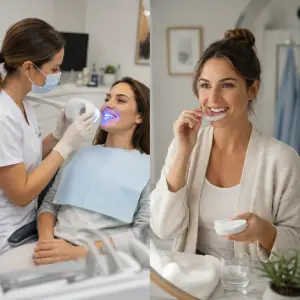
TL;DR - How to Pick the Right Whitening Option
Professional whitening works best when you match the method to your timeline, stain type, and sensitivity risk. A quick exam helps confirm your teeth and gums are ready to whiten safely.
- Choose in-office whitening if you want the fastest noticeable change with professional monitoring.
- Choose take-home trays if you prefer gradual whitening, flexible scheduling, and easier touch-ups.
- If you have sensitive teeth, plan for comfort first (timing, gel strength, and desensitizing strategies).
- If you have crowns or veneers, whitening may not match restorations, ask about cosmetic planning.
- Avoid harsh DIY shortcuts that can irritate gums or worsen sensitivity.
What "Professional Teeth Whitening in Newark" Usually Means
In dental settings, whitening typically uses peroxide-based gels designed to lift stains from enamel in a controlled way. The main difference between options is where whitening happens (in the office vs at home) and how the gel is delivered (professionally applied vs tray-based wear time).
For an overview of the whitening services we offer, visit our teeth whitening in Newark page.
In-Office Whitening: Best for Speed and Supervision
In-office whitening is designed for patients who want a noticeable change quickly and want the process monitored by a dental team. It can be a good fit before a big event, a new job, or a photo-heavy milestone.
Why Patients Choose In-Office Whitening
- Time efficient: you do not have to remember daily wear time for days or weeks.
- Professional monitoring: we can watch for gum irritation and adjust the plan if sensitivity appears.
- Clear starting point: it is easier to track how your teeth respond, then plan touch-ups if needed.
Potential Downsides to Know Upfront
- It can trigger temporary sensitivity for some patients, especially with pre-existing sensitivity.
- Not ideal if you need restorative work first like treating decay or gum inflammation.
- It is not a "one-size-fits-all" solution for every stain type.
At-Home Whitening Trays: Best for Control, Gradual Change, and Touch-Ups
Take-home tray whitening uses trays that hold whitening gel against the teeth for a set wear time. Many patients like this approach because it is flexible and can be customized around sensitivity and lifestyle.
Why Patients Choose Take-Home Trays
- More gradual whitening: helpful if you want smaller changes over time.
- Schedule friendly: you can whiten on your timeline within the instructions provided.
- Often easier on sensitivity: you may be able to use shorter wear times or fewer days per week.
Potential Downsides to Know Upfront
- Consistency matters: skipped days can slow progress.
- Tray fit affects comfort: ill-fitting trays can lead to gum irritation or uneven whitening.
- Some stains are stubborn: you may need an in-office boost or a different cosmetic plan.
Teeth Whitening in Newark: A Simple Decision Checklist
Use these questions before you book. They can help you choose the right starting point and set realistic expectations.
- How fast do you want change? If you want the quickest shift, ask about in-office whitening.
- Do you get "zingers" with cold water? If yes, you may benefit from a sensitivity-first tray plan.
- What stains are you treating? Coffee, tea, and tobacco stains often respond well, but results vary.
- Do you have crowns, veneers, or bonding on front teeth? Plan for shade matching after whitening.
- Will you realistically wear trays as directed? If not, in-office may fit better.
Sensitivity: How to Whiten When You Have Sensitive Teeth
If you have searched for help with sensitive teeth in Newark, you are not alone. Whitening can be uncomfortable for some people, but discomfort is not something you should just push through. In many cases, sensitivity can be reduced with the right plan and by addressing underlying triggers first.
If you want to understand common causes and treatment options, see our sensitive teeth page.
Practical Ways to Reduce Whitening Sensitivity
- Start with an exam: sensitivity from a crack, cavity, or gum recession should be treated before whitening.
- Use shorter sessions: less wear time can mean fewer sensitivity spikes.
- Space treatments out: whitening every other day may be more comfortable than daily use.
- Use desensitizing toothpaste: ask what to use and when to start, often before whitening begins.
- Avoid extra-acidic or very cold triggers during whitening weeks if you notice sensitivity patterns.
Experience note from our team: when patients tell us about sensitivity early, it is often easier to adjust the plan (timing, gel use, and comfort steps) than to stop halfway through because symptoms became too strong.
What Whitening Can and Cannot Change (So You Are Not Disappointed)
Whitening Can Help With
- Surface stains from coffee, tea, red wine, and tobacco (results vary).
- Yellowing that builds gradually over time.
- Brightening your natural enamel shade for a fresher overall look.
Whitening May Not Fix
- Color mismatch from restorations: crowns and veneers typically do not whiten.
- Internal discoloration: some deep stains respond differently and may need another cosmetic strategy.
- Uneven color from enamel wear: the best plan may be whitening plus restorative or cosmetic care.
If your goal is an overall smile upgrade (not just shade), a cosmetic dentistry consultation can help you compare whitening with other options that may better match your goals.
Safety First: What to Avoid With DIY Whitening
It is tempting to try fast DIY whitening trends, but some popular approaches can backfire. Whitening is safest when your teeth are healthy, the gel is used correctly, and your gums are protected.
- Abrasive "scrubs" or powders: can wear enamel and increase sensitivity over time.
- Overusing strips: may irritate gums and trigger ongoing sensitivity.
- Whitening with untreated dental problems: decay, cracks, and gum inflammation can make whitening painful.
How Your Dentist Helps You Choose the Right Plan
A whitening consult typically focuses on the factors that affect comfort and predictability: the health of your enamel and gums, existing dental work, and your sensitivity history. Myung Hae Hyon D.D.S and our team use this information to recommend whether in-office whitening, take-home trays, or a combined approach makes the most sense for your smile goals.
If you are due for an evaluation before whitening, our comprehensive examinations page explains what is included in a thorough visit.
FAQs
Is in-office whitening better than at-home trays?
Not universally. In-office whitening is often best when you want a faster change under professional supervision. Take-home trays can be a great option if you prefer gradual whitening, more schedule flexibility, or a way to touch up shade over time. The best choice depends on your starting shade, your sensitivity history, and what types of stains you have.
Will teeth whitening work if I have crowns, veneers, or fillings?
Whitening gel changes natural tooth enamel but typically does not change the color of restorations like crowns, veneers, or tooth-colored fillings. A dental exam can help you understand whether whitening will create a mismatch and what cosmetic options can keep your smile looking consistent.
What if I already have sensitive teeth?
Sensitivity is common and often temporary, but it should be planned for, especially if you already have sensitive teeth. Your dentist may recommend shorter wear times, lower-strength gels, spacing out sessions, or using a desensitizing toothpaste. If sensitivity is tied to issues like recession, decay, or cracks, treating the cause first is safer than whitening through it.
How long do whitening results last?
Longevity varies based on diet, habits, and home care. Coffee, tea, red wine, and smoking can re-stain teeth faster. Many patients maintain results longer by using occasional touch-ups (as directed) and keeping up with professional cleanings.
Are DIY whitening hacks safe?
Many DIY approaches can irritate gums, increase sensitivity, or wear enamel if they are abrasive or misused. A professional approach helps protect soft tissues and ensures whitening is appropriate for your teeth, especially if you have existing dental work or undiagnosed sensitivity triggers.
Related Reading
- Teeth whitening services
- Cosmetic dentistry options
- Sensitive teeth: causes and care
- Current offers
- Frequently asked questions
Conclusion: Choose the Method That Fits Your Timeline and Comfort
When you are deciding between in-office whitening and take-home trays, the best choice is the one you can complete comfortably and maintain. If your biggest concern is sensitivity, start there. If your biggest concern is timing, ask about an in-office visit and a plan for touch-ups.
Ready to Talk Through Teeth Whitening Options?
If you want help choosing professional whitening, our team at Park Place Dental Group can recommend an approach based on your teeth, your goals, and your sensitivity history. Call 973-732-3208 to schedule a visit.
You can also find directions and office details on our contact page.
Medical disclaimer: This article is for educational purposes and does not replace a dental examination or personalized medical advice.