Park Place Dental Group
Dentistry & Cosmetic and Restorative
Dentistry located in Arts Section, Newark, NJ
Losing a tooth can affect more than just your smile. When a gap is left untreated, nearby teeth can shift and your bite can change, making chewing less comfortable and cleaning more difficult. If you are weighing dental implants, a bridge, or dentures, the most helpful next step is to compare how each option supports your day-to-day life and long-term oral health.
This guide is written for people considering dental implants in Newark, but it also covers bridges and dentures in a practical, side-by-side way so you can walk into your consult with the right questions.
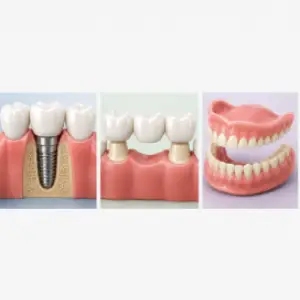
TL;DR - The Quick Way To Choose the Right Tooth Replacement
The best option depends on what you value most: preserving nearby teeth, stability while chewing, maintenance, and how you want your smile to feel. A dental exam helps confirm what your mouth can support.
- Choose an implant if you want a fixed tooth replacement that does not rely on neighboring teeth.
- Choose a bridge if you want a fixed option and the neighboring teeth already need crowns or restorations.
- Choose a denture if you need to replace multiple teeth and want a removable, often more budget-friendly approach.
- Think long-term: stability, cleaning, and how the jaw changes over time matter as much as appearance.
- Ask about maintenance before you decide, because each option has a different care routine.
Start With Your Goal: What Problem Are You Solving?
Patients usually come in with one (or more) of these goals:
- Confidence when speaking and smiling.
- Comfort when chewing, without worrying something will move.
- Keeping surrounding teeth healthier by preventing drift and reducing food traps.
- A plan that fits your life, including cleaning, repair expectations, and time commitment.
In our day-to-day experience, the biggest source of regret is not choosing the "wrong" treatment, it is choosing a solution without understanding how it will feel and what maintenance it requires.
Dental Implants in Newark NJ: What They Do Well (And When They May Not Fit)
A dental implant replaces the tooth root with a small post in the jaw, topped by a restoration that looks and functions like a natural tooth. If you have been searching for "Dental Implants Newark NJ," you are likely looking for a fixed solution that feels stable and supports everyday chewing.
Pros Many Patients Like
- Independent support: implants do not typically require reshaping neighboring teeth.
- Strong bite stability: many people find they can chew more confidently compared with removable options.
- Simple daily routine: you typically brush and floss like you would around a natural tooth (with any recommended tools).
Tradeoffs To Consider
- Time and planning: implants often involve multiple visits over time.
- Bone support matters: your exam and imaging determine whether the area can support an implant as-is.
- Upfront cost: implants can have a higher initial investment, even though they can be cost-effective long term.
If you are exploring an implant specifically to support the final tooth on top, our implant restoration page explains how the replacement tooth is designed for function and appearance.
Provider note: Your consultation with Myung Hae Hyon D.D.S focuses on whether an implant is predictable for your anatomy, your bite, and your home-care routine, not just whether it is a popular option.
Dental Bridges: A Fixed Option That Uses Neighboring Teeth
A traditional dental bridge replaces a missing tooth by anchoring a replacement tooth to crowns on the teeth next to the gap. Many patients choose bridges when they want something fixed (not removable), and when the adjacent teeth already need crowns or significant restorations.
If you want a deeper overview of how bridges work, we outline the basics on our dental bridges service page.
Pros Many Patients Like
- Fixed in place: no taking it in and out.
- Faster path to a complete smile: in some cases, the timeline can be simpler than surgical options.
- Great esthetics: modern bridge materials can look very natural.
Tradeoffs To Consider
- Neighboring teeth are involved: the teeth beside the gap are typically shaped for crowns.
- Cleaning requires technique: you may need special flossing tools to clean under the replacement tooth.
- Future planning: if one supporting tooth develops a problem later, it can affect the entire bridge.
Bridges are often paired with crowns. If you are curious how crown coverage works, our dental crowns page explains the role crowns play in restoring function.
Dentures: Flexible, Removable Tooth Replacement for One or Many Teeth
Dentures can replace several missing teeth (or all teeth in an arch) and are removable for cleaning. They can be a practical choice when multiple teeth are missing, when you need a non-surgical option, or when you want a solution that can be adjusted over time.
Learn the basics on our dentures service page, including the difference between full and partial dentures.
Pros Many Patients Like
- Replaces multiple teeth efficiently: a common choice for larger gaps.
- Non-surgical option: may be appropriate when surgery is not preferred.
- Adjustable: dentures can often be relined or remade as your mouth changes.
Tradeoffs To Consider
- Movement and fit changes: the fit can change over time as gums and bone remodel.
- Chewing can feel different: especially early on while you adjust.
- Daily removal and cleaning: consistent care is important for comfort and oral health.
Side-by-Side Comparison: Comfort, Cleaning, and Long-Term Oral Health
Which Option Feels Most Like Natural Teeth?
Many people say implants feel most natural because they are anchored in the jaw. Bridges are also fixed and can feel very stable. Removable dentures can feel secure too, but the adjustment period may be longer and fit can evolve over time.
Which Option Is Easiest To Keep Clean?
- Implants: similar to cleaning around natural teeth, plus any tools your dentist recommends.
- Bridges: can require special flossing techniques to clean under the bridge.
- Dentures: require removal and cleaning, plus care for the gums and remaining teeth.
What About Bone and Gum Changes Over Time?
Any time a tooth is missing, the supporting bone and gum tissues can change. Your dentist will help you understand how each choice may impact the area long term, and what maintenance can help keep your bite healthy.
A Simple Decision Framework (Use This Before Your Consult)
- Count what you are replacing: one tooth, several teeth, or an entire arch.
- Check the neighbors: if the teeth next to the gap already need crowns, a bridge may be more efficient.
- Be honest about maintenance: if you want something you do not remove, focus on implants or bridges.
- Consider your timeline: ask what happens step-by-step and how long each phase tends to take.
- Ask about a Plan A and Plan B: in many cases, there is a best-case plan and a backup plan if healing or fit changes.
If you are unsure which category you fall into, booking a comprehensive evaluation can help. Our team also outlines what a thorough exam includes on the comprehensive examinations page.
FAQs
Is a dental implant always the best choice for replacing a missing tooth?
Not always. Dental implants can be an excellent long-term option, but the best choice depends on factors like overall health, bone support, timeline, budget, and how many teeth are missing. A bridge or denture may be more practical in certain situations.
Do bridges damage the teeth next to the missing tooth?
A traditional bridge typically relies on adjacent teeth for support, which may require reshaping those teeth for crowns. For some patients this is acceptable, but if neighboring teeth are healthy, an implant may help avoid altering them.
How long do implants, bridges, and dentures usually last?
Longevity varies by home care, bite forces, and ongoing maintenance. Implants are designed as a long-term solution, bridges may need replacement over time, and dentures commonly require relines or remakes as gums and bone change.
What feels most natural when you chew: an implant, a bridge, or a denture?
Many patients report that an implant-supported tooth feels closest to a natural tooth because it is anchored in the jaw. Bridges can also feel stable, while removable dentures may feel less secure without additional support.
Can I switch from a denture to implants later?
In many cases, yes. Some patients start with a removable denture and later consider implants or an implant-supported denture. A dental exam is needed to evaluate bone support and plan the right approach.
Related Reading
- Dental implants overview
- Dental bridges overview
- Dentures overview
- 4 Cosmetic Dentistry Treatments to Enhance Your Smile
- Frequently asked questions
Conclusion: Pick the Option That Matches Your Mouth and Your Life
Choosing between an implant, a bridge, and a denture is less about a single "best" solution and more about fit: your oral health, the condition of nearby teeth, how many teeth you are replacing, and the level of stability you want. The right plan is the one you can maintain comfortably and confidently.
Ready To Talk Through Your Options?
If you are deciding between dental implants, a bridge, or dentures, our team can evaluate your bite, gum health, and the missing-tooth area and explain what each option would look like for you. Call Park Place Dental Group at 973-732-3208 to schedule a visit.
Prefer to start online? You can also find office details on our contact page.
Medical disclaimer: This article is for educational purposes and does not replace a dental examination or personalized medical advice.