Park Place Dental Group
Dentistry & Cosmetic and Restorative
Dentistry located in Arts Section, Newark, NJ
A crown should help your tooth feel stronger and more comfortable. So if you leave the appointment and your new tooth feels "off" (your bite feels uneven, you notice sensitivity, or flossing feels different), it can be worrying. This guide is for patients searching for dental crowns in Newark who want clear next steps and a better sense of what is normal versus what needs a quick adjustment.
In our previous blog, "Top Foods to Avoid with New Dental Crowns in Newark," we covered eating tips after placement. In this article, we focus on troubleshooting: bite problems, sensitivity, and when to come back in.
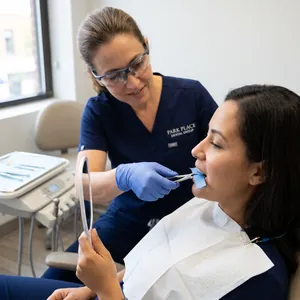
TL;DR - How to Tell If a Crown Issue Needs an Adjustment
Most "off" sensations after a crown come down to bite balance or temporary sensitivity. The good news is that many problems are easy to fix, especially when you call early.
- If chewing hurts or the bite feels high: schedule a bite check soon.
- If cold feels sharper than expected: use sensitivity strategies and monitor the trend.
- If floss shreds or catches: do not force it; the crown edge may need smoothing.
- If you feel throbbing, swelling, or a bad taste: call promptly.
- If you are unsure: it is reasonable to ask a general dentist near you to re-evaluate.
Why a Crown Can Feel "Off" After Placement
Crowns are designed to fit precisely, but your mouth is sensitive to small changes. After a tooth is worked on, you can notice differences in pressure, temperature, and contact points between teeth. Sometimes the tooth is also a bit irritated from the procedure itself, which can temporarily amplify normal sensations.
Common, Fixable Reasons
- Bite is slightly high: the crown touches first when you close.
- Normal post-treatment sensitivity: the tooth can respond more to cold or pressure at first.
- Tight contact between teeth: flossing may feel harder until the contact is evaluated.
- Gum irritation: the gumline can feel sore where the crown margin sits.
Dental Crowns in Newark: Bite Problems That Deserve a Recheck
A bite that feels "off" is one of the most important things to address quickly. Even a small imbalance can put extra pressure on the crowned tooth or the opposing tooth. If your crown feels high or you avoid chewing on that side, it is worth scheduling a bite adjustment.
Symptoms That Often Point to a High Bite
- Pain or discomfort when chewing, especially on one specific spot
- The crown feels like it "hits first" when you close your teeth
- Soreness in the tooth that increases throughout the day
- A sense that your teeth do not fit together the way they used to
- New jaw fatigue or clenching (especially at night)
Experience note from our team: when patients call early about a crown bite that feels high, the adjustment is often quick and helps prevent days (or weeks) of unnecessary soreness.
Sensitivity After a Crown: What Is Normal vs Not Normal
Some sensitivity can be expected after crown placement, but the pattern matters. Brief sensitivity to cold that fades quickly is different from pain that lingers or gets worse. If you already have a history of sensitive teeth, you may notice that sensitivity more strongly at first.
If you want a deeper overview of causes and treatment options, visit our sensitive teeth page.
Try These At-Home Steps (Until You Are Seen)
- Chew on the other side temporarily if a specific bite spot hurts.
- Use a soft toothbrush and brush gently at the gumline.
- Consider a sensitivity toothpaste and use it consistently.
- Avoid extreme temperatures (very cold drinks, very hot soup) for a short period.
- Skip very hard or sticky foods that increase pressure on the crown.
Call Promptly If You Notice Any of These
- Spontaneous throbbing pain (pain that starts without eating or drinking)
- Sensitivity that lingers for a long time after cold or heat
- Pain that is getting worse day by day
- Swelling, fever, or a pimple-like bump on the gum near the tooth
Flossing Discomfort Around a New Crown
Patients often ask, "Why is flossing harder after my crown?" Usually, it comes down to the contact point between the crowned tooth and its neighbor, or a small rough area that makes floss catch. You should be able to floss without shredding, snapping, or needing to yank the floss out.
Safer Flossing Tips for a New Crown
- Slide floss through gently using a back-and-forth motion rather than forcing it
- If floss gets stuck, try pulling it out through the side instead of snapping upward
- If floss repeatedly shreds, stop forcing it and schedule a quick evaluation
What Not to Do If Your Crown Feels Wrong
- Do not "wait it out" for weeks if chewing hurts. A bite imbalance can keep irritating the tooth.
- Do not try to file or adjust the crown at home. That can damage the crown or affect the fit.
- Do not stop cleaning the area. Keep brushing and flossing gently so the gumline stays healthy.
- Do not ignore a loose feeling. A loose crown can allow bacteria under the edges.
When to Call a General Dentist Near You (Even If Pain Is Mild)
If you are searching for a general dentist near you in Newark because something does not feel right after a crown, you are not overreacting. Small problems are typically easier to correct early, before they turn into bigger issues.
Our general dentistry page explains how ongoing evaluations help protect teeth and restorations over time.
How We Evaluate a Crown That Feels "Off"
A follow-up visit is usually focused and practical. The goal is to identify whether the issue is bite balance, gum irritation, sensitivity from the tooth itself, or something related to fit and margins.
- We listen to the symptom pattern: what triggers it (chewing, cold, flossing), and whether it is improving.
- We check bite contact: looking for high spots and uneven pressure.
- We inspect the gumline and crown edges: to rule out irritation points and floss-catching spots.
- We confirm next steps: which could include a bite adjustment, smoothing a rough area, or further evaluation when needed.
If you want background on why crowns are recommended and how they protect a damaged tooth, see our dental crowns service page.
FAQs
Related Reading
- Dental crowns overview
- Sensitive teeth causes and treatment
- Foods to avoid with new crowns
- What a general dentist near you does
- Contact our office
Conclusion: A Quick Bite Check Can Protect Your New Crown
If your crown feels "off," it does not automatically mean something went wrong, but it does mean your mouth is giving you useful feedback. Bite imbalances, sensitivity triggers, and flossing discomfort are common reasons patients come back in, and many are corrected with a straightforward follow-up.
Need Help With a Crown That Does Not Feel Right?
If you are concerned about a new crown, our team can help you understand what is happening and what to do next. Call Park Place Dental Group at 973-732-3208 to schedule a crown bite and comfort check.
Medical disclaimer: This article is for educational purposes and does not replace a dental examination or personalized medical advice.